
Public Mental Health
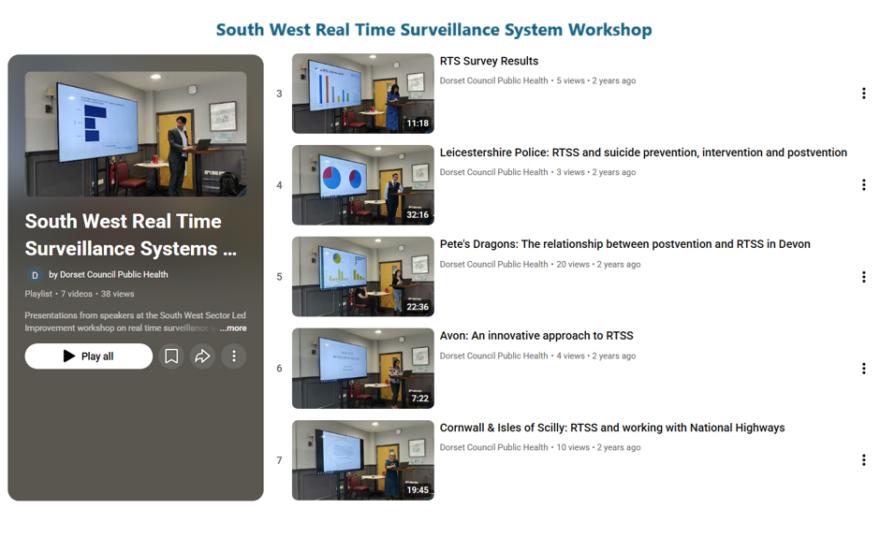
South West Real Time Surveillance System Workshop
A South West Real Time Surveillance System (RTSS) Workshop was held to initiate and support the public mental health priority of real-time suicide surveillance across the region. The workshop brought together a wide range of partners involved in suicide prevention and surveillance activity.
Participation was welcomed from all RTSS partners, including:
- Police services
- Coroners and Coroners’ Officers
- South West Ambulance Service
- Local authority public health teams
- Office for Health Improvement and Disparities (Department of Health and Social Care)
- Suicide prevention communications leads
- Mental health trusts
- GPs and other primary care staff with a specific interest in suicide prevention and real-time surveillance
- Bereavement support service commissioners
The event featured expert speakers, including national representatives from the Department of Health and Social Care, who presented on the National Real Time Surveillance System, alongside examples of good practice from local RTSS arrangements in the South West and other areas.
Key presentations included:
- Helen Garnham, National Programme Manager – Public Mental Health, who presented on the Suicide Prevention Strategy and Action Plan for England 2023–2028
- Cam Lugton, Programme Lead for the Mental Health Intelligence Network, who explored the role of the National Real Time Surveillance System
The workshop was well attended and generated lively discussion, constructive feedback, and valuable sharing of learning and best practice.
Several key presentations were recorded and are available to view, particularly for those who were unable to attend on the day. These can be accessed via the following YouTube playlist:
South West Real Time Surveillance System (RTSS) Self Assessment
Two South West Real Time Surveillance System (RTSS) self‑assessment reports were undertaken as part of the South West Association of Directors of Public Health Sector Led Improvement (SLI) programme, reflecting the regional priority to strengthen suicide prevention through timely, high‑quality surveillance.
The initial self‑assessment was carried out in April 2024 to establish a baseline understanding of how RTSS arrangements were being developed and implemented across the region. All 13 South West local authorities contributed, providing a comprehensive picture of system maturity, governance, data‑sharing arrangements and use of surveillance information to inform suicide prevention activity. The intention was not to audit compliance, but to support peer learning, share good practice and identify common challenges that could be addressed locally, regionally or nationally.
Evaluation was built into the programme from the outset, with a repeat self‑assessment conducted 12 months later in April 2025. This re‑assessment enabled local authorities to review progress against the original recommendations, assess how learning had been taken forward, and identify further areas for improvement. Twelve local authorities took part in the second round, allowing for meaningful comparison and tracking of change over time.
Key areas of improvement identified between the two reports included:
- Greater use of data analysis and reporting tools, particularly increased uptake of Power BI
- Progress in the development and strengthening of Memorandums of Understanding and data‑sharing agreements
- Improved partnership mechanisms for reviewing suspected suicides across multi‑agency groups
- Increased formalisation of RTSS roles within job descriptions in some areas
- Early progress towards improved funding stability and sustainability in a number of local systems.
Both reports emphasised the value of strong multi‑agency collaboration, timely data sharing, and the integration of RTSS data into wider suicide prevention activity, including cluster response, bereavement support and strategic planning. Ongoing challenges were also highlighted, particularly around police capacity, coronial engagement and data flow consistency.
To support transparency, shared learning and ongoing improvement, both self‑assessment reports are stored on the NHS Futures South West Suicide Prevention workspace, where they are accessible to South West local authority suicide prevention leads and partners. This platform also supports continued collaboration through the sharing of resources, templates and examples of good practice across the region.
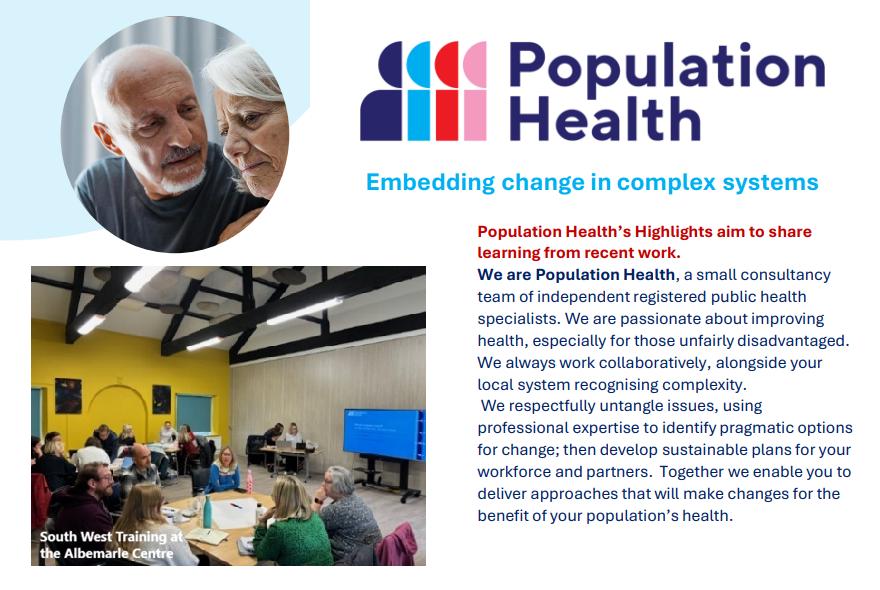
South West Suicide Cluster Response Training
The South West ADPH network commissioned Suicide Cluster Response face-to-face training delivered by Population Health Ltd for South West public health local authority teams. The event was attended by 23 local authority suicide prevention leads, practitioners and consultants from across the South West. Thank you to everyone who participated and contributed to the day.
The overall aim of the training was to support attendees to develop the skills and confidence needed to implement effective suicide cluster responses within their local systems.
The session objectives included:
- Providing a safe learning space to prepare for a local system response to a suicide cluster or contagion
- Offering a brief overview of the national suicide prevention strategy, alongside cluster and contagion guidance in relation to local area plans
- Sharing prior experiences of cluster and contagion response across the South West
- Exploring the roles and responsibilities of public health teams and partner organisations in responding to clusters
- Working through the system response process using hypothetical examples of suspected suicide cases, including both adults and young people
- Engaging with the process through a public health leadership and facilitation lens
- Providing opportunities to review local cluster response plans and share examples of good practice
- Supporting attendees to understand their public health role within this process and identify next steps for local action
Key learning from the day was captured and shared with attendees, alongside their recorded next steps for action. Participants were also asked to consider what further regional support would help strengthen their local work. This feedback was explored further through network meetings, with the aim of encouraging greater collaboration, regional support and the sharing of resources across the South West.