
Substance Use
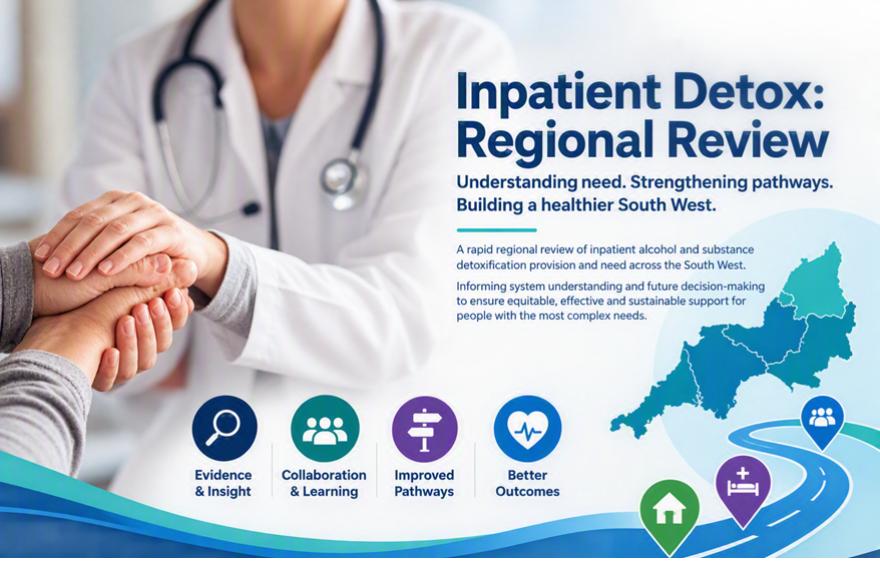
South West Regional Review of Inpatient Alcohol and Substance Detoxification Need
As part of the South West ADPH Substance Use priority, a programme of work was undertaken to understand and respond to changes in inpatient alcohol and substance detoxification provision across the region.
This work was initiated following the planned closure of the Acer Unit, the South West’s only NHS medically managed inpatient detoxification unit, located at Southmead Hospital in Bristol. Recognising the potential impact of this loss on people with the most complex alcohol and drug treatment needs, the South West ADPH Practice Improvement Programme commissioned a rapid regional review of inpatient detoxification need to inform system understanding and decision-making.
Led under Objective 1 of the Substance Use priority the rapid regional needs assessment and review was undertaken over a constrained timeframe prior to the Acer Unit’s closure in June 2025. Its primary purpose was to assess current provision, patterns of use, and unmet need for inpatient detoxification, and to understand the likely implications for detox pathways across the South West, particularly for individuals least able to be supported through community or residential provision. The findings of this work are captured in the final report, South West Regional Review of Inpatient Alcohol and Substance Detoxification Need (Not published due to restricted NDTMS data inclusion).
Following the closure of the Acer Unit, individuals requiring inpatient detoxification have been diverted to alternative provision, including residential detox services within the region and NHS inpatient units elsewhere in England. To reflect on the findings of the rapid review and explore how the system was adapting in practice, the SW ADPH convened a Sector‑Led Improvement seminar in November 2025, titled “Inpatient Detox: What Does Good Look Like?”. The seminar brought together commissioners, providers and regional partners to review the evidence, share early impacts of the closure, and collectively consider future models for detox provision in the South West.
The report draws together quantitative data, commissioner intelligence, stakeholder insight and learning from the seminar. While the rapid nature of the assessment meant precise modelling of need was not possible, the findings present a consistent picture of rising alcohol and substance‑related harm, significant unmet need, and growing system fragility. Historic underfunding has reduced specialist capacity, and people with the most complex needs often experience the greatest barriers to care, compounded by structural bias, stigma and fragmented pathways.
The review sets out recommendations to support more strategic, equitable and sustainable detoxification pathways across the South West. These include:
- Completing full local needs assessments to better quantify demand across community, residential and inpatient detox
- Risk‑assessing post‑Acer arrangements and determining the most appropriate options for local populations
- Commissioning a regional detoxification modelling exercise through OHID to inform future capacity and investment decisions
- Considering specialised commissioning of medically managed, complex inpatient detox, maintaining a national network of provision
Next steps
The report has been shared across the SW ADPH network for onward discussion with drug and alcohol commissioners and system partners (with appropriate controls due to restricted NDTMS data). As part of the actions emerging from the review, the findings will be tabled at a forthcoming regional forum to support strategic discussion on regional modelling, future capacity planning, and options for strengthening detoxification pathways across the South West.
This work provides a strong shared evidence base to support collective leadership and future decision‑making for inpatient detoxification provision in the region.